01
Culture & city life
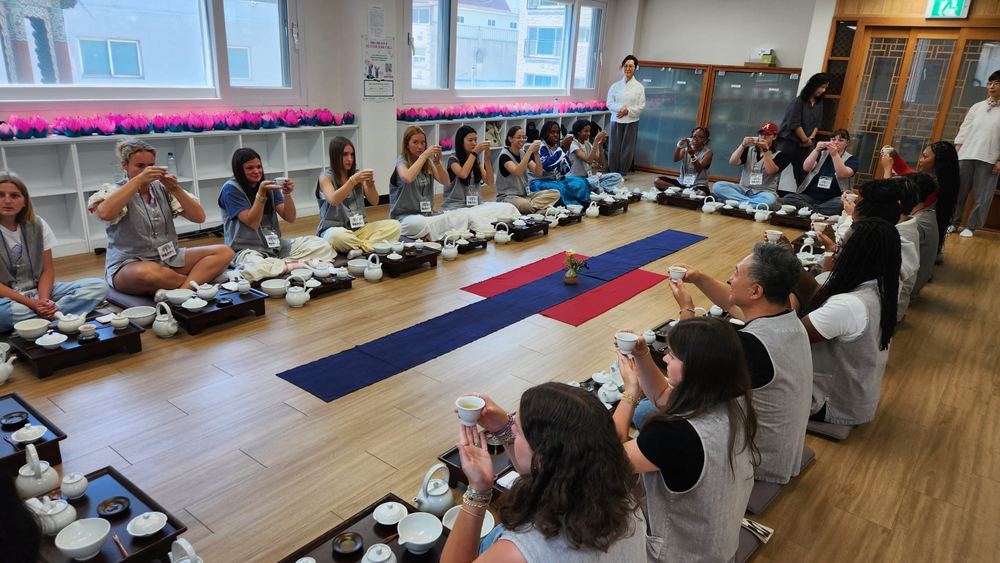
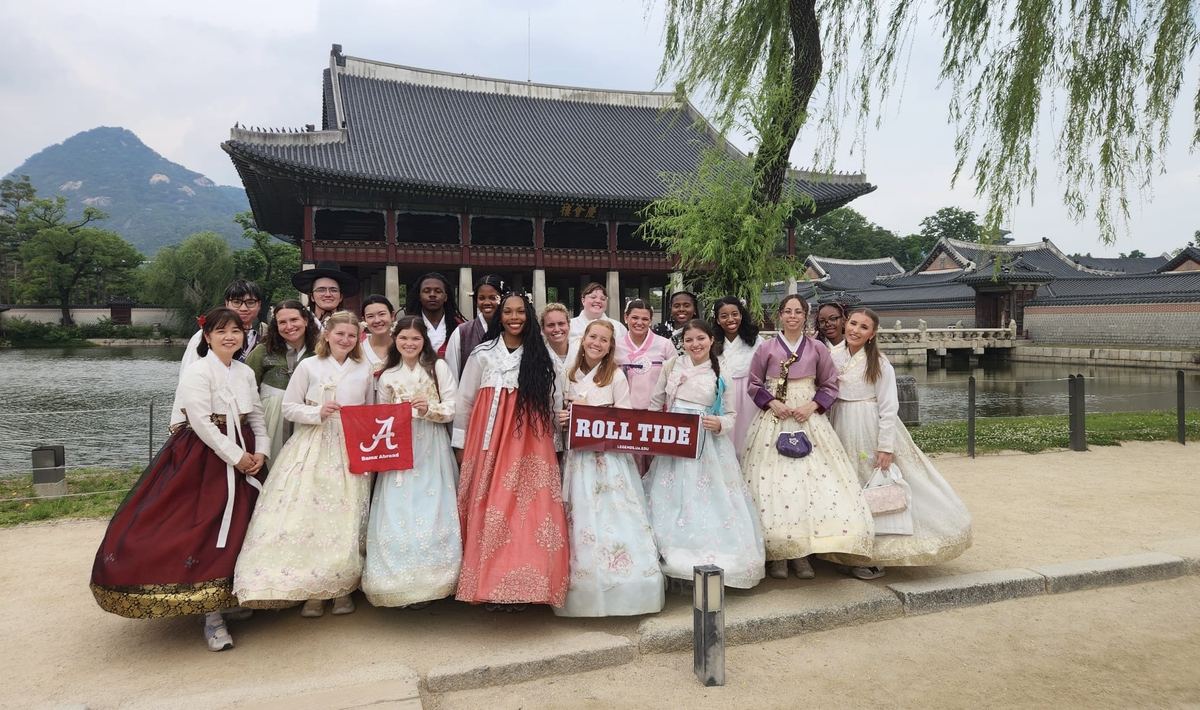
Palaces in hanbok, tea ceremonies, night markets and a KBO baseball game — Korea's history and its Tuesday evening, in the same week.

Study advertising and public relations in the studios, agencies and streets where Korean culture is made — and carried to the rest of the world.
01 / The program
Connect what you study with what you experience.
Two APR courses taught by Alabama faculty at Yonsei University in Seoul. Class sessions come first, over the opening days of the trip; the rest of the three weeks takes you into the newsrooms, studios and companies you just finished reading about. Weekends are free.
Apply on the program's own page in the university's study abroad portal. Sign in with your myBama credentials and start the application for UA in South Korea: Advertising & Public Relations. Every applicant then meets with Dr. Ki for a short interview. There is no hard cutoff — applications are read in the order they come in, and the group closes once all 18 places are taken.
You do not have to be ready to apply to get in touch. If you are still weighing it — cost, housing, whether your major fits — email Dr. Ki and ask.
Open the program application ↗ Email Dr. Ki ↗02 / Beyond the classroom
Seoul and Jeju are on every itinerary.
The rest changes each year, so no two cohorts see the same Korea.
Palaces in hanbok, tea ceremonies, night markets and a KBO baseball game — Korea's history and its Tuesday evening, in the same week.

Inside KBS and MBC, on the floor of a live music show and at Naver — with the professionals who build Korean brands.
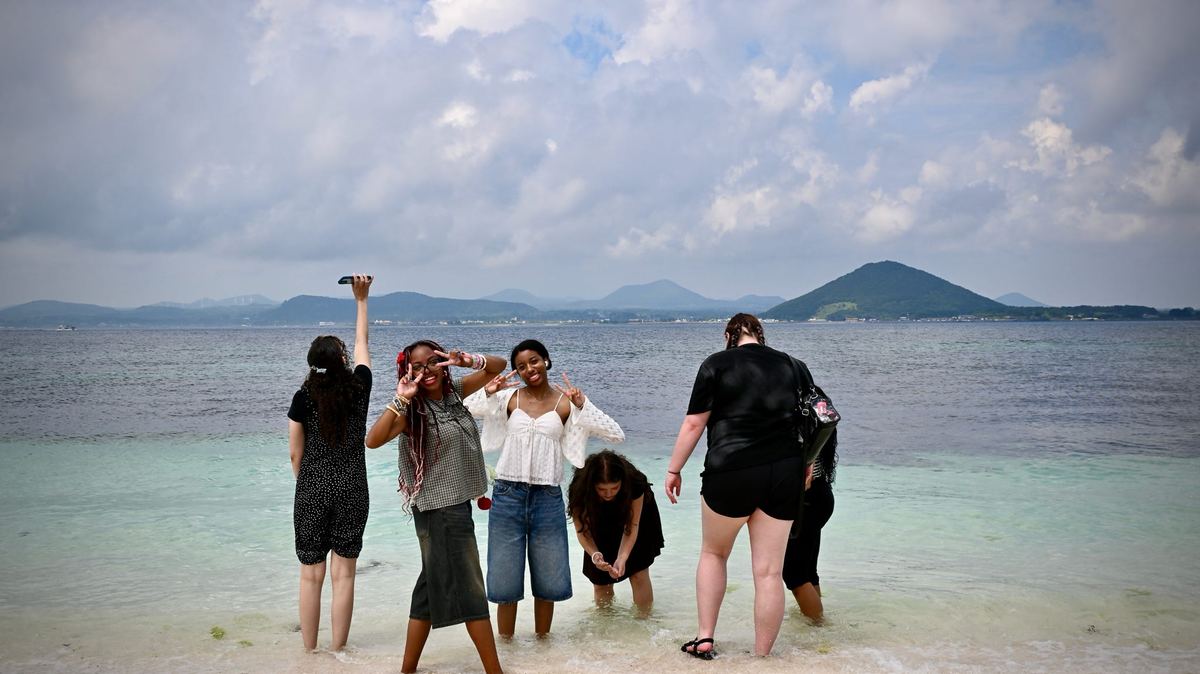
Jeju Island every year, plus one more region each summer. In 2027 the group heads into Gyeonggi and Gangwon provinces.


Planned for Summer 2027. Class sessions are held at Yonsei University over the first several days; the rest of the program is site visits and excursions like these. Weekends are yours — nothing is scheduled. A few stops shift as bookings and broadcast schedules are confirmed.
2026 / The trip
Shot by last summer's group across three weeks — Seoul, the studios, the coastline, and eighteen people who mostly did not know each other on day one.
03 / Academics
Students take both courses for a total of six credits.
Graduate students may enroll at the 590 level.
How Korean advertising moves from subway posters and neighborhood signage to the screens that carry Korean products worldwide.
How Korean organizations build reputation at home and turn cultural strength — music, film, food, tech — into global influence.
All majors welcome. No prerequisites. Recent groups have included students from nursing, business and the honors college.
04 / Where you go
Two anchors stay fixed on every itinerary.
Beyond them, each cohort gets a different corner of the country.
Home base for three weeks — classes, company visits, palaces, night markets and a KBO baseball game.

Volcanic coastline, black-sand beaches and the calmest days of the trip.
Next summer's group heads into the provinces just outside Seoul and across to the east coast. Recent cohorts went to Gyeongju and Busan instead.

Photo journal / Through the years
From class discussions to island visits.
A new album goes up at the end of each summer.
Student voices
In their own words: learning, friendships and life in South Korea.
Every quote below comes from a student who made the trip.
05 / Our faculty
Both courses are taught by full professors from the Department of Advertising & Public Relations, who travel with the group for all three weeks.

Strategic communication and the relationships organizations build with their publics — and how emerging technology, artificial intelligence included, is changing that work. She directs the Korea program and teaches the public relations course on site in Seoul.

Advertising and media psychology — why audiences engage with messages the way they do, across technologies and cultures. A Korea Foundation Fellow, he teaches the advertising course on site in Seoul.
Step by step
Four steps, and the first one takes about fifteen minutes. Dr. Ki walks every applicant through the rest.
Open the program page in UA's study abroad portal, sign in with myBama, and start the application for UA in South Korea: Advertising & Public Relations.
Open the program application ↗A $250 deposit reserves your place in the group and comes off the program fee — it is the first $250 of the $6,225, not an extra charge. Education Abroad will tell you when and how to pay it.
Education Abroad and Dr. Ki will email you from there — including to schedule your interview in early November.
Add your name to the program list and we will send you info sessions, deadlines and pre-departure details as they come.
Sign-up form ↗Info sessions, deadlines and reminders — a handful of emails a year, nothing else.
Thank you — you are on the list. Dr. Ki will be in touch.
Trouble with the form? Open it in a new tab ↗
06 / Your next step
The next program runs May 27–June 17, 2027, and applications are open now. Everything begins on the program's page in UA's study abroad portal — open it, sign in with myBama, and start the application.
Still deciding? Email Dr. Ki first. Most students do, and there is no expectation that you have made up your mind.
Only 18 students travel each summer. Apply early.
Open the program page in UA's study abroad portal, sign in with your myBama credentials, and start the application for UA in South Korea: Advertising & Public Relations. There is no hard deadline — applications are read in the order they come in, and every applicant has a short interview with Dr. Ki soon after applying. The group closes when all 18 places are taken, so the earlier you apply, the better your odds. Email Dr. Ki at ki@apr.ua.edu with any question before you submit, or simply to learn more.
Students from all majors are welcome. The courses have no prerequisites, but registration requires instructor approval and completion of study abroad requirements.
The program fee for Summer 2027 is $6,225, and the $250 deposit you pay when you apply counts toward it. International airfare and personal spending are the two costs the fee does not cover.
You do not have to pay it all at once — the balance can be split into three installments. Email Dr. Ki for the payment schedule and a full breakdown.
Tuition for six credit hours, accommodation, ground transportation in Korea, excursions and entrance fees, insurance, some meals, and the round-trip flights to Jeju. Not included: your international airfare and personal spending.
Previous arrangements included hotels rated three stars or above with two students per room, and classroom space at Yonsei University within walking distance of the hotel. Arrangements may change for the next program.
Ask your financial aid advisor about your eligibility and available funding. Explore study abroad scholarships, including C&IS opportunities.